Debt Consolidation: When It Actually Helps (And When It Makes Things Worse)
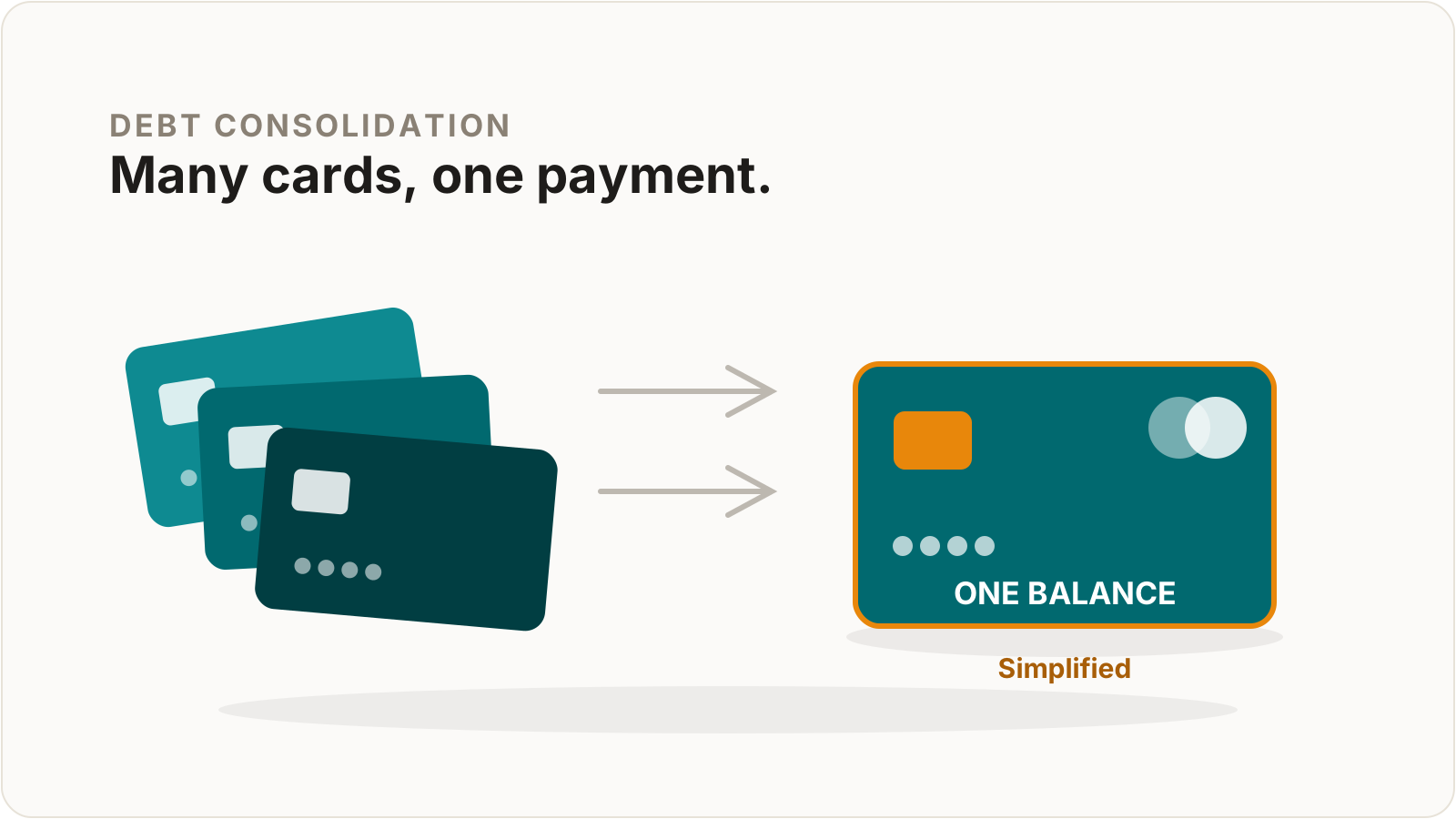
Debt consolidation gets pitched as a solution to almost every debt problem. Sometimes it is. Often it makes things worse.
The difference matters because getting this wrong costs thousands of dollars, not just a little. Here's how to tell which situation you're in.
What Debt Consolidation Actually Is
Consolidation means taking one new loan to pay off multiple existing debts. Instead of five payments to five lenders, you make one payment to one lender.
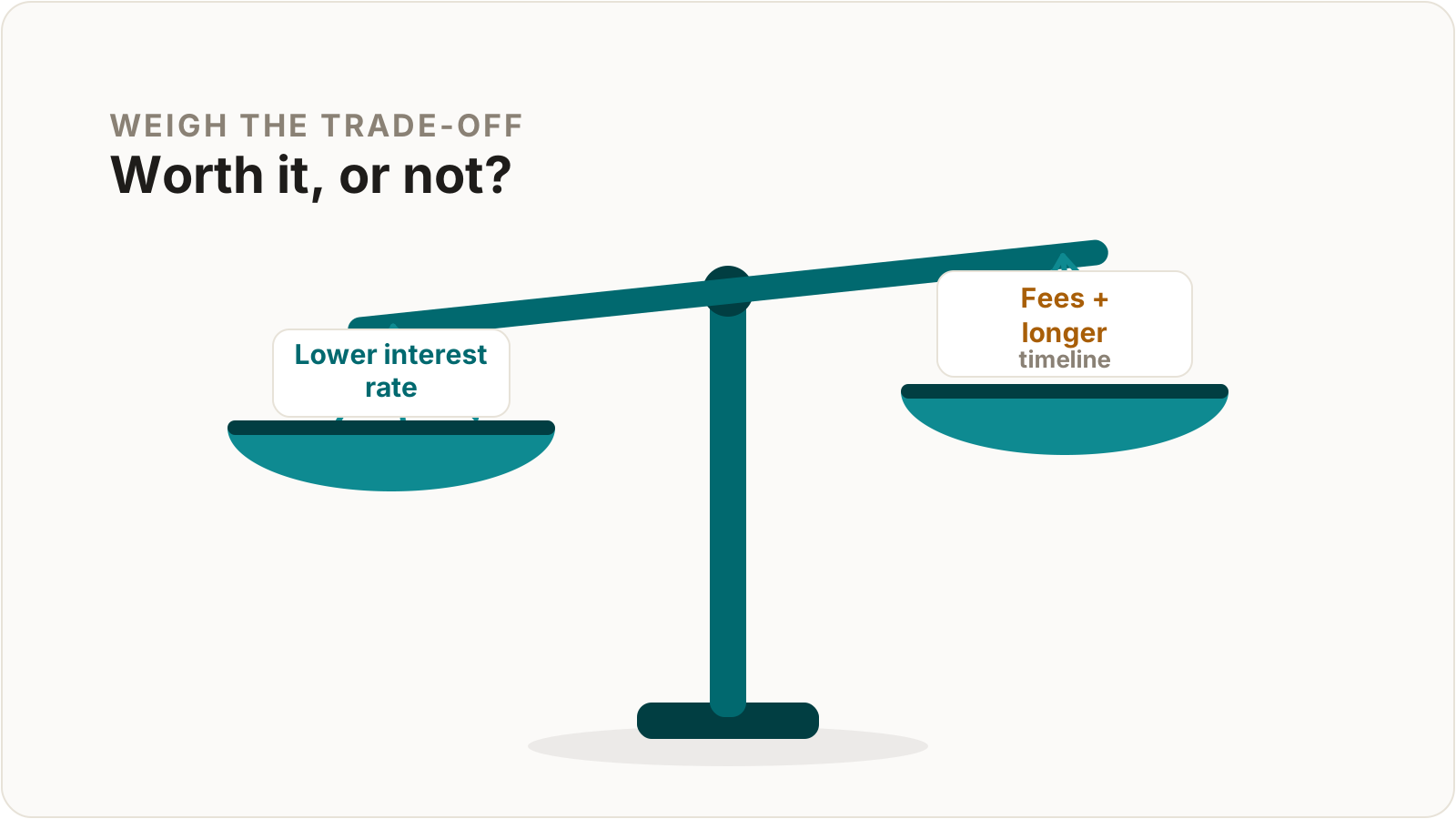
The mechanism is straightforward. The logic is that the new loan carries a lower interest rate than the average of what you're currently paying. If that's true, you save money. If it's not, consolidation is a reorganization exercise with fees attached.
When a Consolidation Loan Makes Sense
There's a real use case for consolidation. It works when:
Your credit score is 670 or higher. Below this, lenders won't offer you a rate meaningfully better than your existing debt. You need good credit to access good rates.
You can get a rate significantly lower than your current weighted average. If you're carrying $20,000 at an average of 22% APR and a lender offers 10%, the math is genuinely compelling. If the offer comes in at 20%, you're paying fees to break even.
You have a realistic payoff timeline. Consolidation works best when you're aggressive. If you're planning to coast on the new minimum, you'll likely end up paying more total due to a longer repayment period.
You won't re-accumulate on the cleared cards. This is the trap. Consolidation pays off your cards. Now those cards have zero balances and open credit limits. People who don't close those accounts — or who lack the discipline to leave them alone — end up with the consolidation loan plus new card debt. Twice the problem.
The Real Math: $20,000 at 22% vs. 11%
You have $20,000 spread across four credit cards at an average APR of 22%. Minimum payments total $480/month. You're paying around $6,800/year in interest alone.
A consolidation loan at 11% APR over 48 months gives you a monthly payment of roughly $516 and total interest paid of about $4,800. That's $2,000 saved over four years.
But factor in a 4% origination fee on a $20,000 loan: that's $800 upfront. Your real savings drops to $1,200.
That's still meaningful. But the savings shrink fast if the rate difference is smaller, the fee is higher, or you extend the repayment timeline.
What About Balance Transfer Cards?
A consolidation loan isn't the only tool. For credit card debt specifically, a balance transfer card is often worth considering first.
How They Work
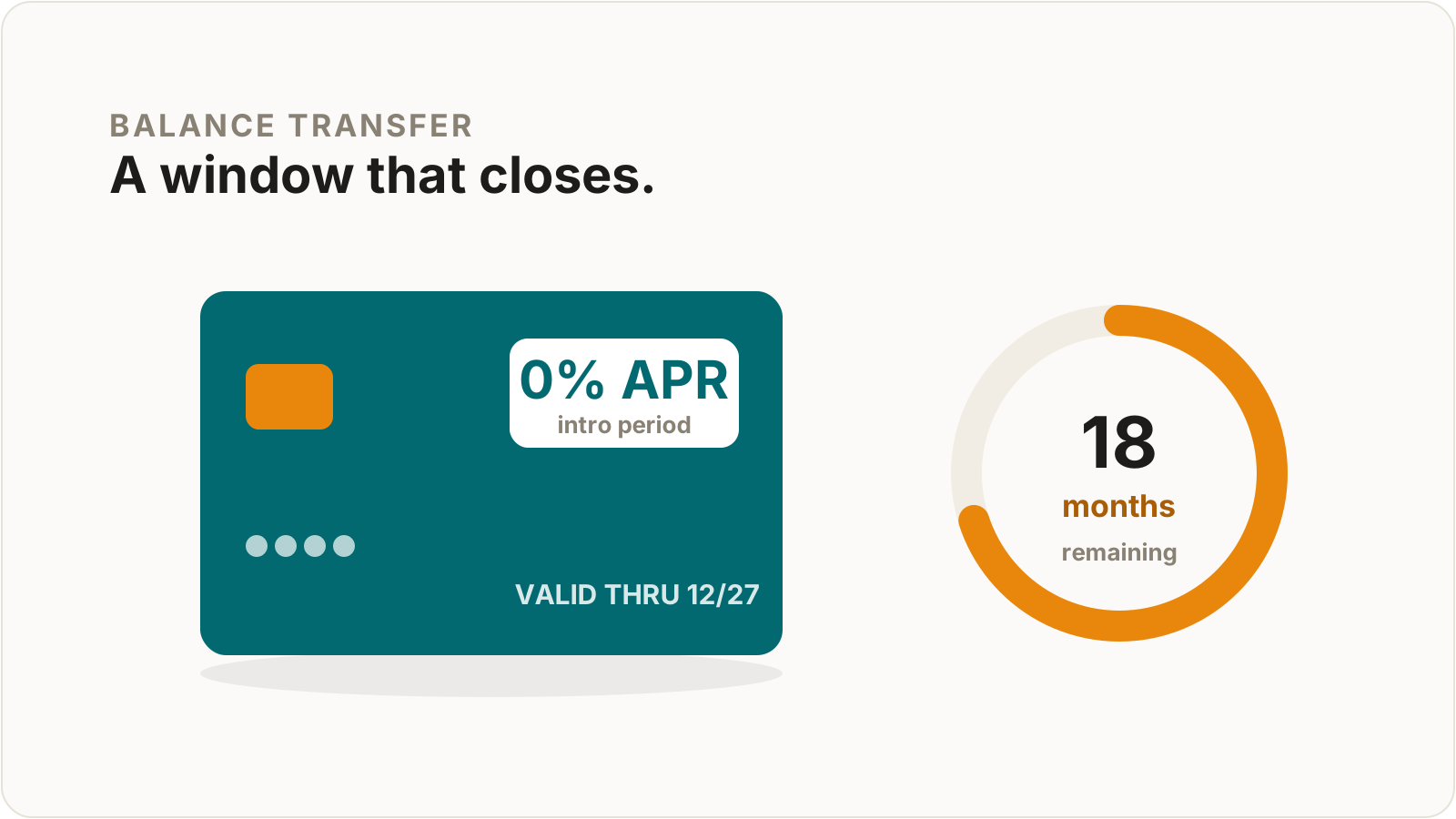
A balance transfer moves existing credit card balances onto a new card that offers 0% intro APR for a promotional period — typically 12 to 21 months. During that window, every dollar you pay goes directly toward principal. No interest accumulating in the background.
Most cards charge a balance transfer fee of 3–5% of the amount moved. On a $10,000 balance, that's $300–$500 upfront. There's no loan application, no fixed monthly payment structure, and no origination fee beyond the transfer fee itself.
When They're Better Than a Loan
Balance transfers make more sense than a personal loan when:
- Your balance is smaller — under $10,000–$15,000, where you can realistically pay it off within the promo period
- All of your debt is credit card debt — balance transfers only accept credit card balances, not auto loans, medical debt, or personal loans
- You can pay aggressively during the promo window — if you move $8,000 to an 18-month 0% card, you need to pay roughly $445/month to clear it before the rate resets
- Your credit score is strong — the best balance transfer cards require good to excellent credit, typically 670 and above
If you can clear the balance within the promotional period, a balance transfer is almost always cheaper than a personal loan. The transfer fee is fixed. With a loan, you're paying interest the entire time.
The Catch
Two things end balance transfers badly.
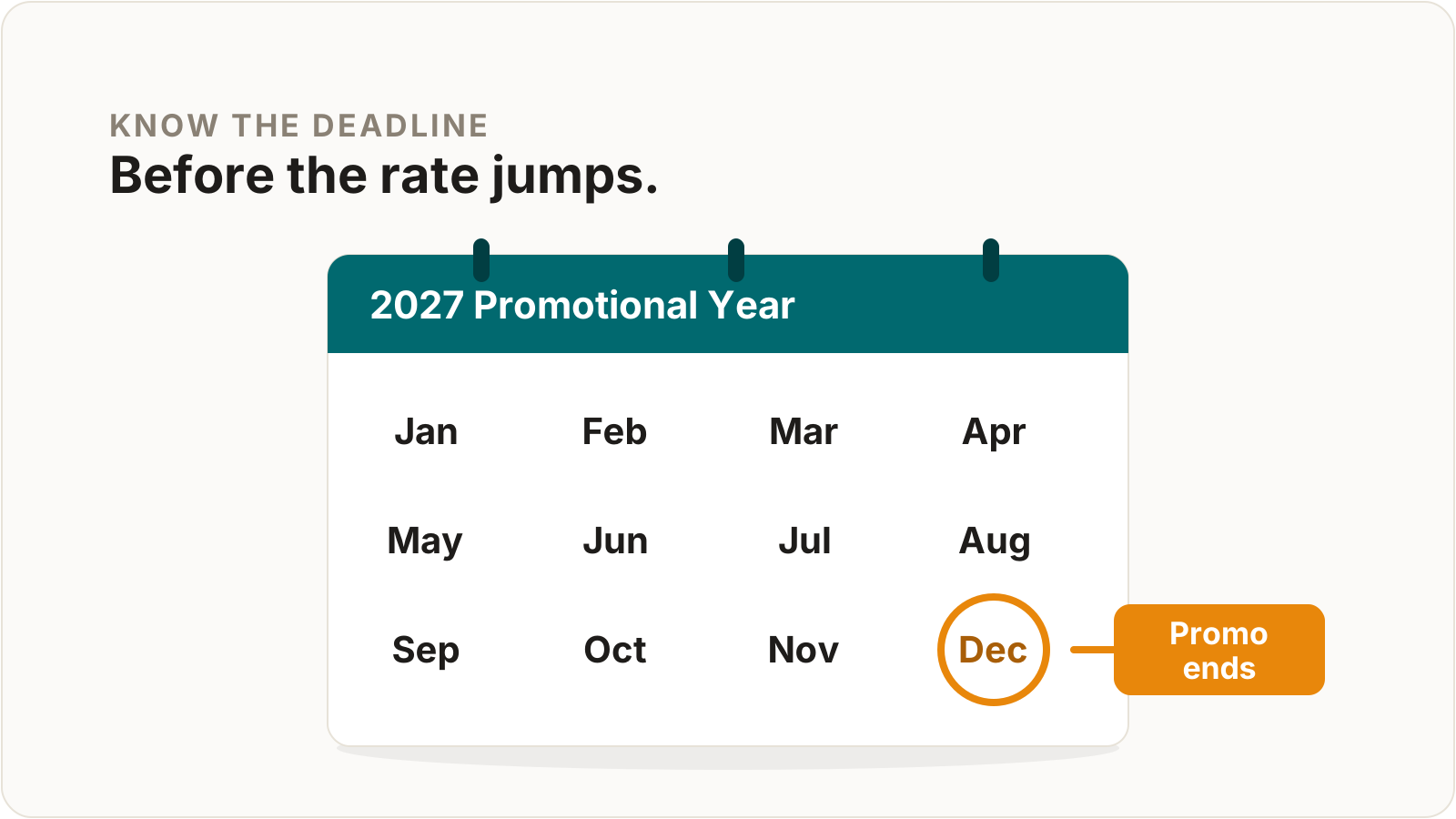
The first is the rate reset. When the promotional period ends, whatever balance remains converts to the card's standard APR — often 25–29%. If you haven't paid down the balance significantly, you're back where you started, minus the transfer fee you paid.
The second is the same trap as consolidation loans: the cleared cards. Moving a balance to a new card doesn't eliminate the old card. It just empties it. The same re-accumulation risk applies.
When Consolidation Makes Things Worse
Your credit score is below 670. You won't get a rate low enough to make the numbers work. The lenders who will approve you often charge 25–30% APR, which is no better than what you have now.
The new term extends your payoff timeline. A lower monthly payment sounds attractive. But if you're paying it for 7 years instead of 3, you'll pay more total interest even at a lower rate.
Origination fees are 4–6%. On a $20,000 loan, that's $800–$1,200 added to your debt before you even start. Many online lenders charge this.
You're using consolidation to avoid changing behavior. Consolidation restructures debt. It doesn't pay it off. The behaviors that created the debt need to change regardless.
The Available Credit Illusion
Cleared balances feel like freed-up money. They're not.
When consolidation pays off four credit cards, those cards now show zero balances and full available credit limits. That available credit is genuinely dangerous if the habit that built the debt in the first place hasn't changed. The most common way consolidation fails isn't the math — it's this. People end the process with a consolidation loan balance plus new card balances, a worse situation than the one they started with.
If you consolidate and keep the cards open, treat those limits as though they don't exist.
Build your free debt payoff plan →
The Alternative: A Ranked Payoff Plan
If consolidation isn't right for your situation, the alternative isn't to white-knuckle minimum payments for a decade.
A structured payoff plan using a ranked payoff strategy can cut years and thousands of dollars off your payoff timeline without a new loan, without origination fees, and without the re-accumulation risk. If you want to move fast, a step-by-step plan for paying off debt gives you the exact sequence.
With $20,000 at 22% APR and $200/month extra on top of minimums, a well-structured plan gets you debt-free in around 54 months with approximately $9,400 in interest paid. That's worse than a good consolidation deal. But it's real, it's actionable today, and it doesn't require a 670 credit score.
Sometimes the debt you're keeping is the one that needs a plan.
Build your free debt payoff plan →
Frequently Asked Questions
Is debt consolidation a good idea?
It depends on the rate you can qualify for. If you can get a consolidation loan at a significantly lower APR than your current average — and you won't re-accumulate on cleared cards — it can save thousands. If you can't get a meaningfully better rate, it's rarely worth the fees.
What is the difference between a debt consolidation loan and a balance transfer?
A consolidation loan replaces all your debts with one new loan. A balance transfer moves credit card debt to a new card at 0% interest for a promotional period, typically 12–21 months. Balance transfers suit credit card debt specifically; loans work for any debt type.
Does debt consolidation hurt your credit score?
Applying for a new loan creates a hard credit inquiry, which can temporarily lower your score. Longer term, consolidation often improves scores by reducing credit utilization and simplifying on-time payments.
What credit score do I need to consolidate debt?
Most competitive consolidation loan rates require a FICO score of 670 or higher. Below this, the rates offered often aren't better than your existing debt, making consolidation less useful.
Can I consolidate debt without a loan?
Yes. A 0% balance transfer card moves credit card balances to a card with no interest for a set promotional period. You typically pay a transfer fee of 3–5% of the balance moved.