Debt Snowball vs. Debt Avalanche: Which Method Actually Works for You?
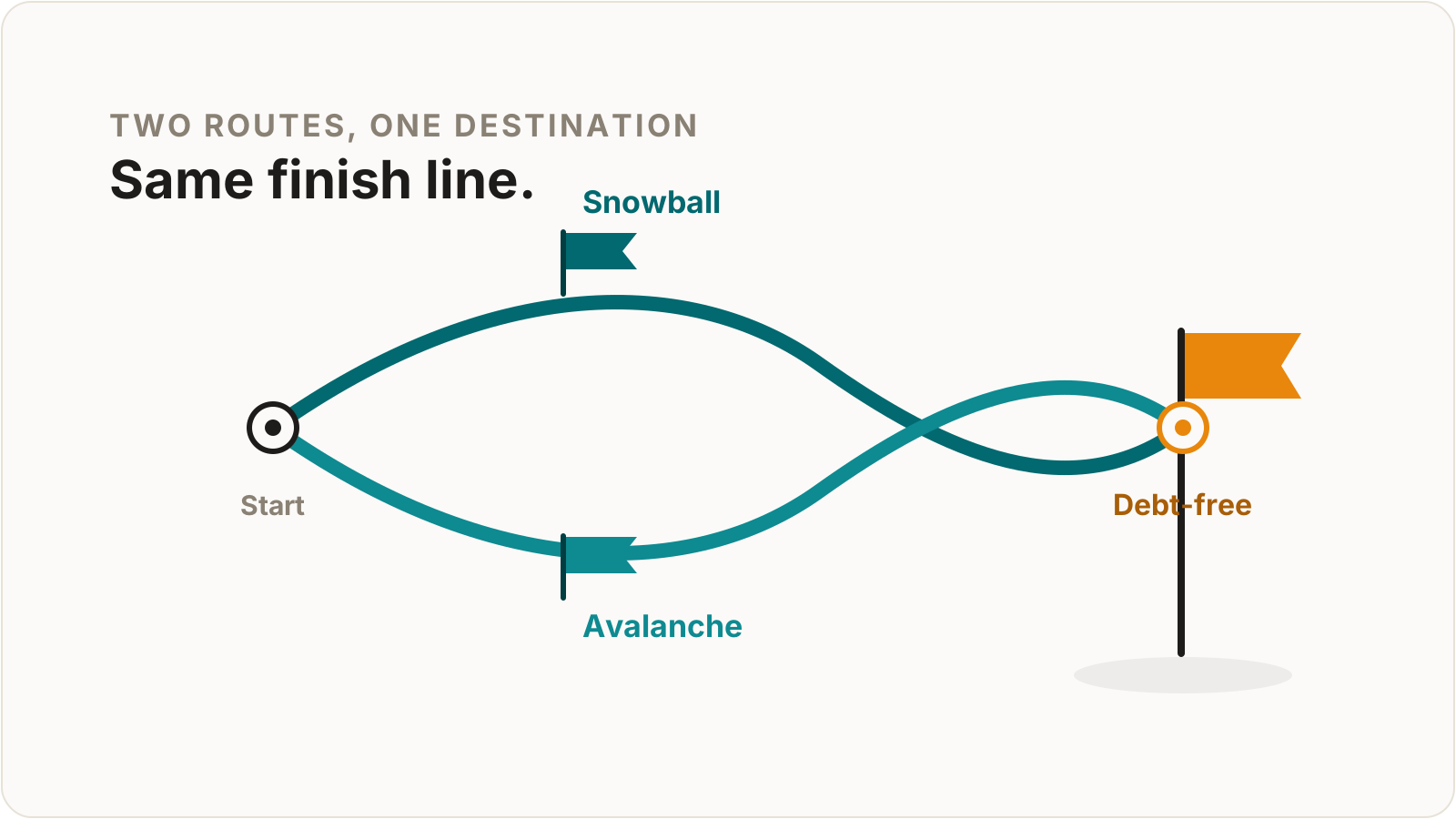
Two people. Same debts. Different strategies. One saves more money. The other is more likely to finish.
The debate between the snowball and avalanche methods has been running in personal finance circles for years. Both work. The difference is in how they work and which one fits how your brain works.
Or maybe you're not sure either method is right for you — debt consolidation is worth understanding before you commit to a payoff sequence.
Here's the full picture.
What Each Method Is
Debt Snowball ranks your debts from smallest balance to largest balance, ignoring interest rate. You pay minimums on everything, then throw your full attack amount at the smallest balance until it's gone. Then you move to the next smallest.
Debt Avalanche ranks your debts from highest interest rate to lowest. You pay minimums on everything, then throw your full attack amount at the highest-rate debt first.
The mechanics are identical. The ranking is different.
Real Numbers: $22,000 Across 4 Debts
Let's make this concrete. Say you have:
| Debt | Balance | APR | Minimum |
|---|---|---|---|
| Store card | $800 | 24% | $25 |
| Medical bill | $2,200 | 0% | $50 |
| Credit card A | $6,500 | 19% | $130 |
| Personal loan | $12,500 | 11% | $280 |
You have $200/month extra to attack with, on top of minimums.
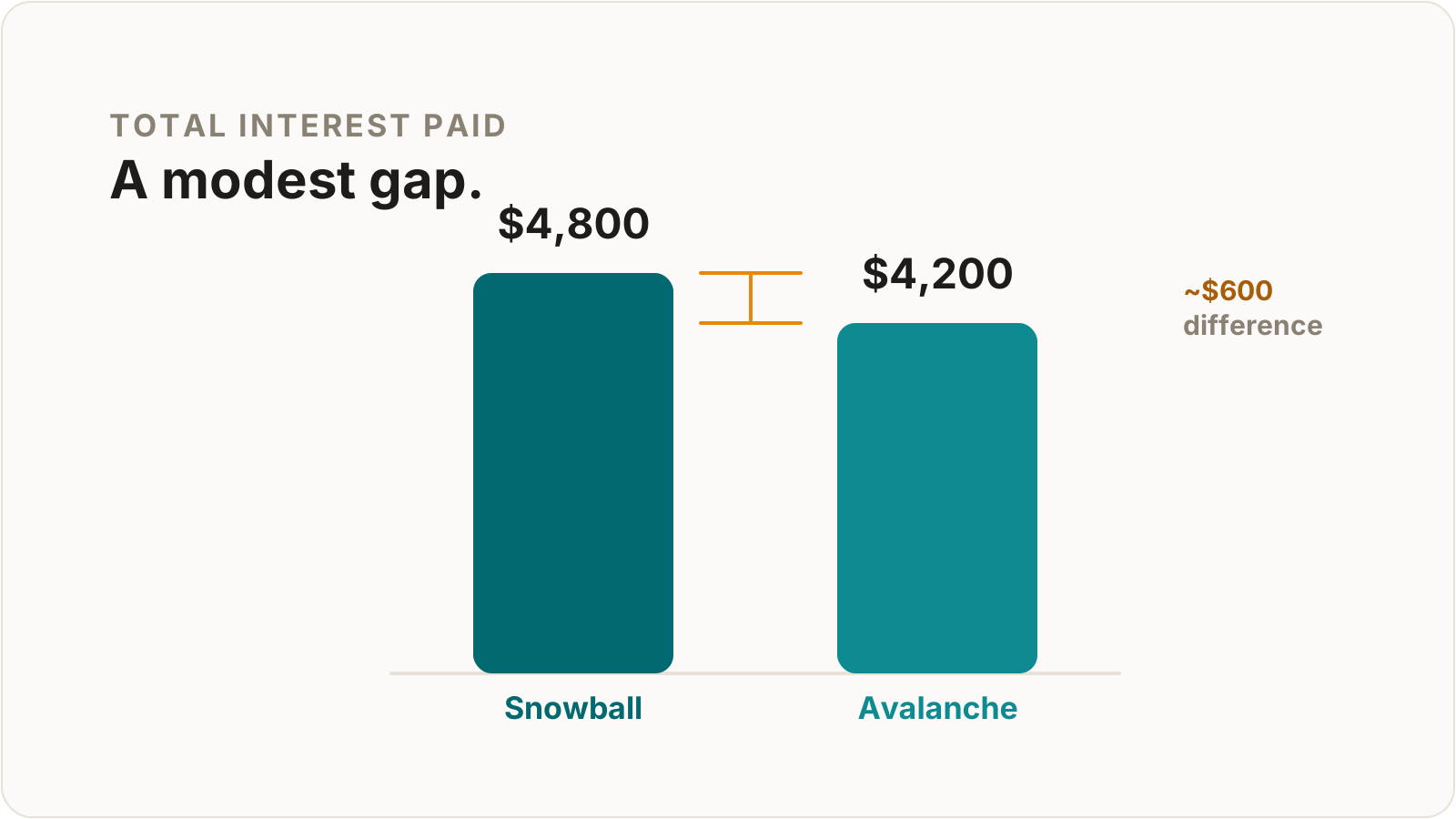
Under Snowball: You knock out the $800 store card first (roughly 4 months), then the $2,200 medical bill, then the credit card, then the loan. Total time: approximately 42 months. Total interest paid: roughly $4,800.
Under Avalanche: You attack the store card first anyway (it has the highest rate), then Credit Card A (19%), then the loan (11%), then the medical bill (0%). Total time: approximately 41 months. Total interest paid: roughly $4,200.
The math difference: about $600 in interest and one month. That's not nothing, but it's not dramatic either. On larger balances with bigger rate spreads, avalanche saves more. On this kind of spread, the difference narrows.
The Psychology of Snowball: Why Quick Wins Change Everything
Snowball ignores math because it respects psychology.
When you clear that $800 store card in month 4, something happens in your brain. A block falls. A debt is gone. The tower is shorter. That's not just a metaphor. Research on goal completion shows that finishing sub-goals releases the same neural reward circuitry as finishing the whole goal.
You feel like you're winning, because you are.
That feeling generates continued behavior. People who've tried and abandoned debt payoff before often succeed on their second attempt when they switch to snowball. The quick win creates momentum at exactly the moment motivation is most fragile.
The Math of Avalanche: Better on Paper
Avalanche works from the opposite direction. It asks you to be patient for bigger gains later.
If your highest-interest debt is also your largest debt, you might spend 18 months attacking it before anything falls. That's 18 months of progress that's hard to see. 18 months of watching a big balance decrease slowly.
For some people, that's fine. If you're motivated by numbers, if you have a spreadsheet mindset, if seeing the interest savings tick down is satisfying in itself, avalanche is the play. You'll pay less. You'll probably finish around the same time. And you'll do it without the psychological scaffolding snowball provides.
Who Snowball Is Right For
- You've tried paying off debt before and lost steam
- You have several small-to-medium debts across multiple accounts
- You need something to happen quickly to believe the plan is working
- The psychological win of closing an account matters to you
Who Avalanche Is Right For
- You're disciplined and data-driven
- Your highest-interest debt is significantly larger than others
- You find math motivating, not abstract
- You've stuck with long-term plans before without needing quick feedback
Can You Switch Methods Mid-Way?
Yes. There is no penalty for switching strategies partway through.
If you started with snowball to build momentum and you've cleared one or two smaller debts, you may find you're ready for a longer stretch between payoffs. At that point, switching to avalanche for the remaining balances can save you real money without sacrificing the momentum you've already built.
The reverse is also true. If you started with avalanche and you're eight months in with nothing fully cleared yet, switching to snowball to knock out a smaller balance can reignite the motivation to keep going.
Reassess after each payoff. The method you use on debt three does not have to be the same one you used on debt one. What matters is that you keep the attack amount moving forward.
The Honest Verdict
The best debt payoff strategy is the one you follow for 36 months when you're tired and it's inconvenient and your car needs repairs.
Not sure which method to pick? Start with snowball. You can always switch later. Finishing 100% of a snowball plan beats abandoning an avalanche plan at 90%. The method you complete wins every time.
Snowball is more likely to produce that outcome for most people. Avalanche is optimal on paper.
As part of a full step-by-step debt payoff plan, strategy selection is Step 2. The rest of the plan works the same regardless of which you pick. And if you're weighing whether to combine or restructure your debts before choosing a payoff order, read up on debt consolidation first.
PayoffPal runs both scenarios and shows you your debt-free date under each method. Compare them side by side before you commit.
Build your free debt payoff plan →
Frequently Asked Questions
What is the debt snowball method?
Pay off your smallest debt balance first, regardless of interest rate. When it's cleared, roll that payment to the next smallest. It prioritizes momentum and quick wins over mathematical efficiency.
What is the debt avalanche method?
Pay off your highest interest rate debt first. It minimizes total interest paid. Mathematically optimal — but if your highest-rate debt is also your largest, it can take months before anything is fully cleared.
Which method saves more money?
Avalanche saves more in interest. On a typical spread of debts, the difference is often a few hundred dollars. The method you actually stick with saves more money than the one you abandon.
Can I switch from snowball to avalanche mid-way?
Yes. There's no penalty for switching. Reassess after clearing one debt — if momentum has built and you're comfortable with a longer wait before the next payoff, switching to avalanche from that point can save money.
Does debt snowball or avalanche work for all types of debt?
Yes. Both methods work for any consumer debt: credit cards, personal loans, store cards, medical bills, or BNPL balances. List them by balance (snowball) or APR (avalanche) and apply the same approach.