How to Pay Off Debt Fast: A Step-by-Step Plan That Actually Works
Most debt advice sounds like this: "Cut your lattes. Make a budget. Pay more than the minimum."
You already know that. It doesn't help.
The problem isn't lack of tips. It's lack of a plan. There's a difference between knowing you should pay off debt and having a numbered sequence you follow every month until it's done.
This is the sequence.
Why Most Debt Advice Fails You
Generic advice lives at the level of principle, not action. "Spend less than you earn" is technically correct and completely useless when you're staring at five different balances with five different interest rates and minimum payments due at five different times of the month.
What you need is a repeatable system. Not willpower. Not a spreadsheet with 47 rows. A simple, front-loaded plan where you know exactly what to do on the first of the month and exactly when the whole thing ends.
Here's how to build that plan.
Step 1: List Every Debt You Owe
Open a notes app, a blank doc, whatever. Write down each debt with three numbers:
- Current balance
- Minimum monthly payment
- Interest rate (APR)
That's it. No need to track transaction history or categorize spending. This is not a budgeting exercise. You're building a payoff plan.
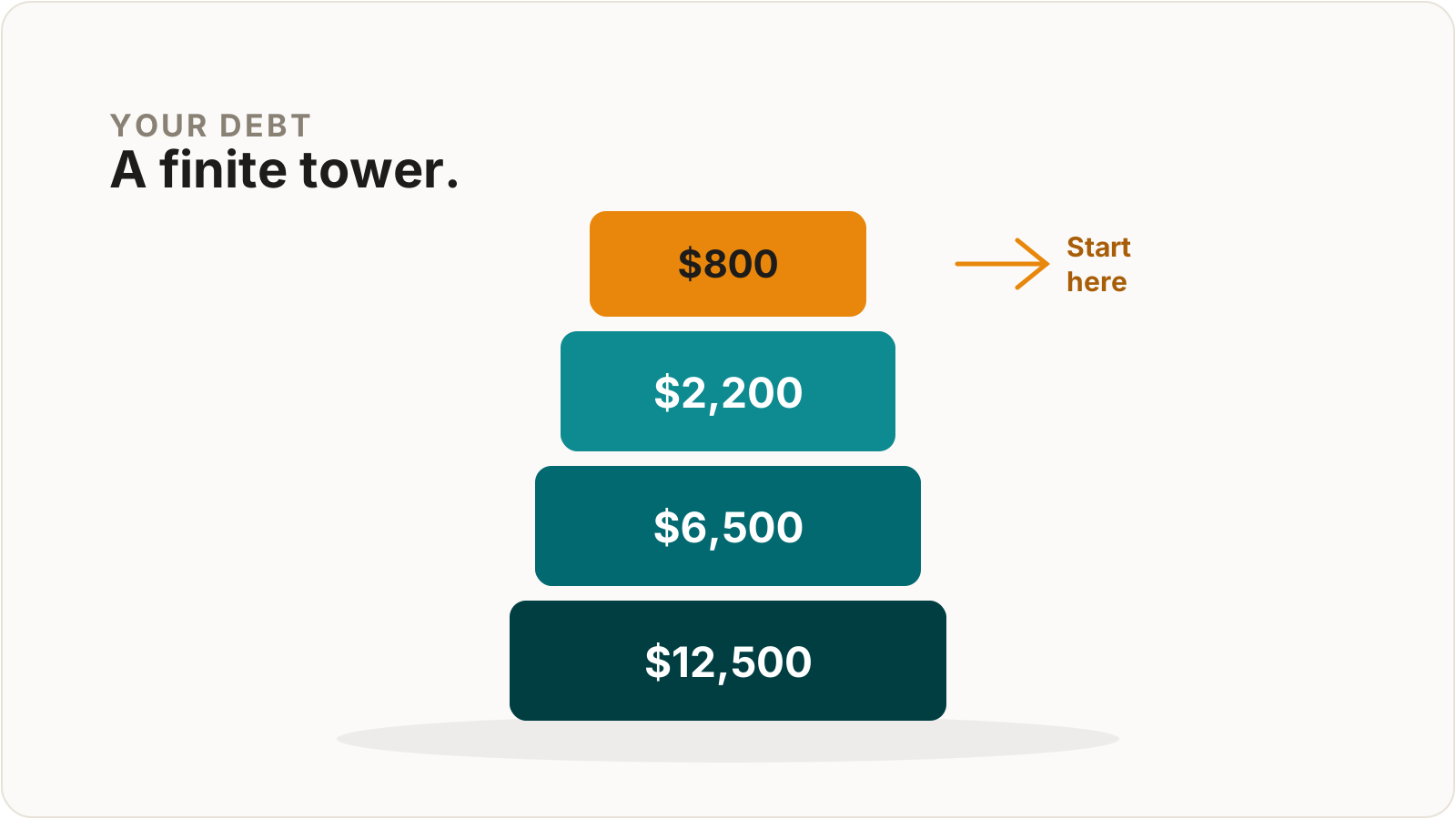
Most people find this step uncomfortable. Seeing all of it at once can feel like standing at the base of a very tall tower. That reaction is normal. The tower is real, but it's also finite. You're about to start knocking blocks off it.
Step 2: Choose a Payoff Strategy
There are two proven methods for paying off multiple debts. They differ in approach, not in outcome. Both work. The right one is the one you'll actually stick with.
Debt Snowball
Pay off your smallest balance first, regardless of interest rate. When it's gone, roll that freed-up payment to the next smallest. The logic here is psychological: clearing a debt entirely — even a small one — creates a real sense of forward motion. That momentum compounds over time.
Best for: people who need early wins to stay engaged, or who have several small balances cluttering the picture.
Debt Avalanche
Pay off your highest interest rate debt first. When it's cleared, move to the next highest. This is the mathematically optimal approach. It minimizes total interest paid across the life of your debt.
Best for: people who can stay motivated without short-term wins, or who carry one large high-rate balance that's costing them the most.
Which Is Right for You?
| Debt Snowball | Debt Avalanche | |
|---|---|---|
| Payoff order | Smallest balance first | Highest interest rate first |
| Total interest paid | Slightly more | Least possible |
| Motivation style | Early wins | Long-term optimization |
| Best if... | You need momentum | You want to minimize cost |
| Both methods share | Same core mechanic: pay minimums on all, attack one target |
Still undecided? Read the full breakdown: Debt Snowball vs. Debt Avalanche: Which Method Actually Works for You?
Should You Consolidate First?
Before choosing a payoff order, it's worth asking whether consolidation changes the math. Debt consolidation rolls multiple debts into a single loan — ideally at a lower interest rate than what you're currently paying.
If you qualify for a consolidation loan or balance transfer card with a meaningfully lower rate, it can reduce what you owe in interest and simplify your monthly payments down to one. If you don't qualify for a better rate, consolidation mainly adds complexity without benefit.
Read the full guide: Is Debt Consolidation Right for You?
Step 3: Find Your Attack Amount
Your attack amount is the extra money you can direct at your target debt each month, above all the minimums.
You don't need to find $500. Even $50 extra per month compounds into hundreds — sometimes thousands — of dollars saved over time. The point isn't to find a huge number. The point is to find a consistent number.
Some places people find it:
- One subscription canceled
- One fewer takeout order per week
- A side gig, even occasional
- Temporarily redirecting savings contributions (short-term, while high-interest debt exists — see the FAQ below for when this makes sense)
- A small raise, tax refund, or one-time windfall directed entirely at the target
Set a number you can actually hit every month. Consistency matters far more than size. A $75 extra payment every month for three years does more than a $500 payment once.
Ready to see your debt-free date? Enter your balances once. PayoffPal ranks them by your chosen strategy, applies your attack amount, and shows you the exact month your last debt disappears.
Step 4: Automate Minimums, Attack One Debt
This is the operational core of the plan.
Set every minimum payment to autopay. Then every month, throw your full attack amount at the one target debt your strategy identified.
That's the whole system.
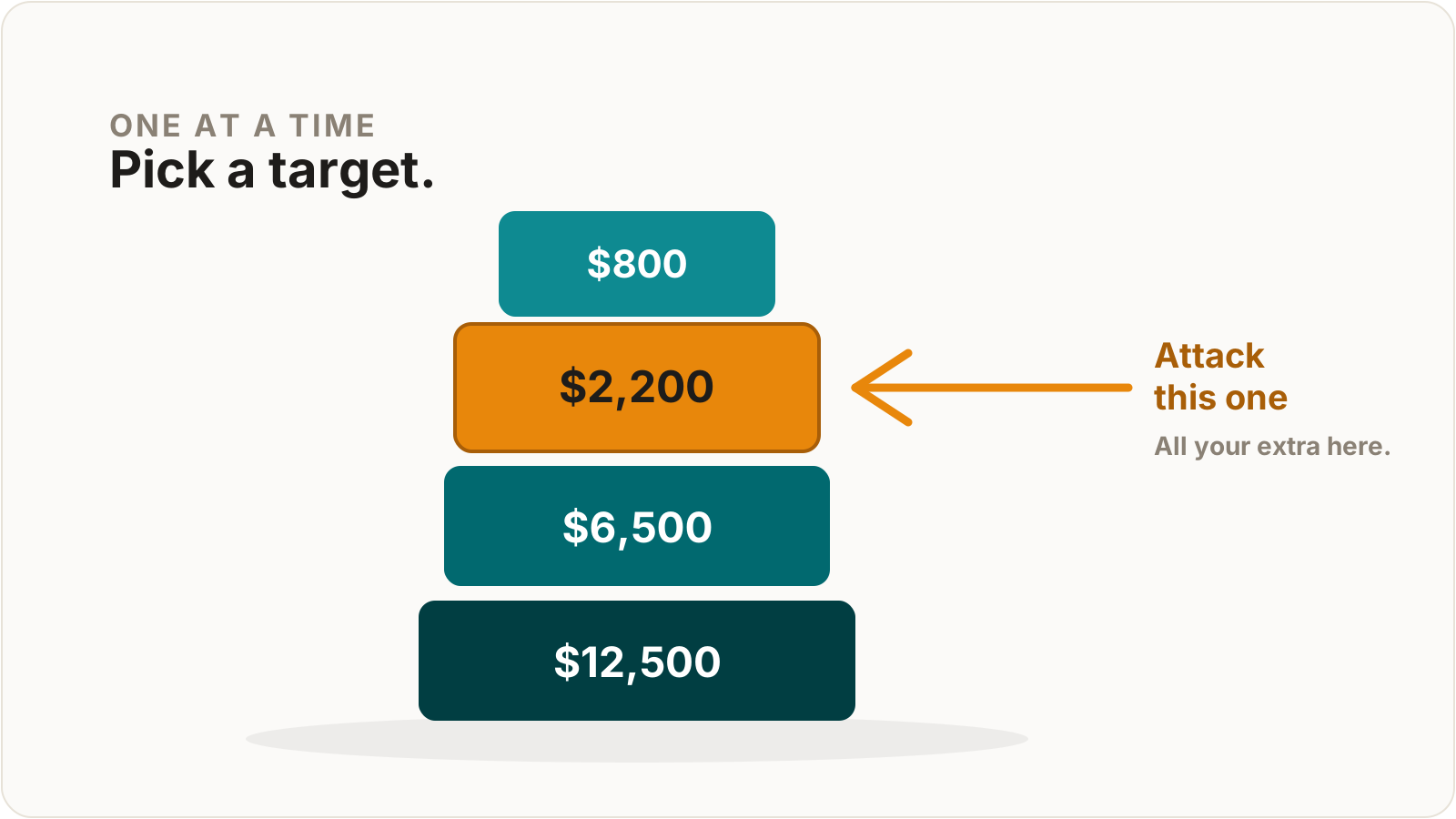
You are not dividing extra money across multiple debts. You are not trying to optimize five things at once. You have one target. Everything else just treads water until that target falls.
When it falls, you move to the next debt. Your attack amount grows because you've freed up the minimum payment from the cleared debt. This is the snowball rolling downhill. This is the avalanche gaining speed.
At each step, your monthly attack gets bigger — without requiring any new income or sacrifice. The freed minimum from Debt 1 gets added to your existing attack and directed at Debt 2. Then both freed minimums get directed at Debt 3. The math accelerates as you go.
Step 5: Track Progress Visually
Here's something most people skip: making progress visible.
Debt payoff happens over months or years. That timeline is long enough for motivation to die quietly if you have nothing to look at. Progress tracking isn't optional — it's what keeps the plan alive when the early energy fades.
The most effective form is visual. Not a spreadsheet of numbers. A chart that shrinks, a tower that loses blocks, a bar that moves. Seeing the tower get shorter is fundamentally different from reading that your balance dropped by $300. The visual does something the number doesn't: it makes the progress feel real.
Set a monthly check-in — not weekly, not daily. Once a month, update your tracker, note what fell, and confirm the next target. That's enough.
For the longer game, read more about staying motivated through a multi-year payoff. The plan needs a visual layer to survive a two- or three-year timeline.
What If Your Debt Feels Overwhelming?
Everything above assumes you have some breathing room — a stable income, minimums you can meet, and a small amount of flexibility to direct at a target debt. Not everyone is starting from there.
If your debt feels unmanageable — if you're missing payments, fielding collector calls, or genuinely unsure how to cover minimums — the plan above is not the first step. The first step is getting a clear picture of your options.
The National Foundation for Credit Counseling (NFCC) is a nonprofit network of accredited credit counselors who offer free or low-cost sessions. They can help you assess whether a debt management plan, negotiated interest rates, or other options are appropriate for your situation. Their website is nfcc.org.
If you're making your minimums and have any room to maneuver, the steps above apply directly. If you're not, professional guidance first will put you in a better position to use those steps later.
The One Number to Focus On
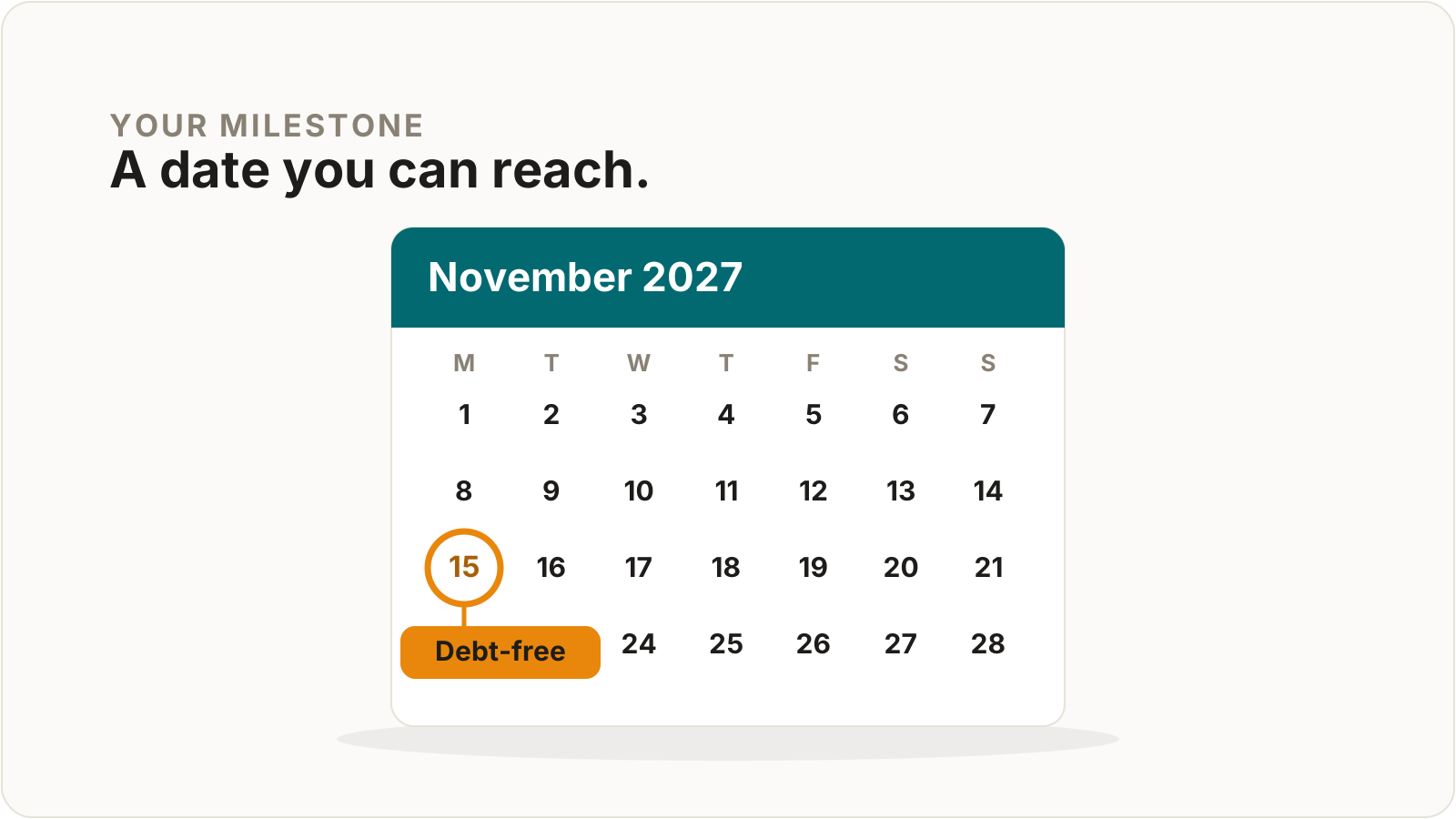
Once your plan is running, you have one number to care about: your debt-free date.
Not your total balance. Not your interest paid. Not your debt-to-income ratio.
Your date. The month and year when the last block falls.
Everything else is noise. The date is the signal. It's what you're working toward. It's what changes how you think about a discretionary purchase. It's what makes the sacrifice feel bounded and real instead of infinite and vague.
Read more about why your debt-free date is the most important number in your payoff plan — and how to use it as a decision-making anchor throughout the process.
Users on PayoffPal are on track to clear their debt by April 2027 on average. That's not a vague "someday." That's a specific point on a calendar.
Frequently Asked Questions
What is the fastest way to pay off debt?
List all your debts by balance and interest rate, pick a payoff strategy (snowball or avalanche), find any extra money above your minimums, and direct it at one debt at a time. Automating minimum payments removes friction and ensures nothing slips while you focus on your target. A debt payoff planner like PayoffPal calculates your debt-free date in under 5 minutes.
How do I pay off multiple debts at once?
You don't — not effectively. Pay minimums on all debts, then attack one at a time with any extra money. This is the core mechanic behind both the snowball and avalanche methods. Splitting extra money across multiple debts slows down every single one. Concentrated attack on a single target is what creates momentum.
How much extra do I need to pay to make a difference?
Even $50 extra per month can reduce a repayment timeline by months and save hundreds in interest. Consistency matters more than size. A small, sustainable extra payment every month beats a large irregular one. The goal is finding a number you can hit reliably — not the largest number you can hit once.
Should I pay off debt or save?
If your debt carries a higher interest rate than your savings rate — almost always true for credit cards — paying off debt first gives a better return. An emergency fund of $500–$1,000 is worth keeping as a buffer against unexpected expenses. Beyond that baseline, directing spare money at high-interest debt typically makes more financial sense than building savings while carrying expensive debt.
What if I can't afford more than the minimum payments?
Paying minimums is a valid starting point — the priority is not missing them. Missed payments damage your credit and trigger fees that make the debt harder to clear. If debt feels genuinely unmanageable, the National Foundation for Credit Counseling (NFCC) offers free and low-cost debt counseling and can help you assess your options.
Your Plan, Built in 5 Minutes
You now have the framework. The next step is turning your list of balances into a ranked plan with a debt-free date attached.
PayoffPal does exactly this. Enter your debts once. It ranks them by your chosen strategy, applies your attack amount, and shows you the date your last debt disappears. No credit check. No ongoing input. No budgeting categories.