What Knowing Your Debt-Free Date Actually Does to Your Decisions
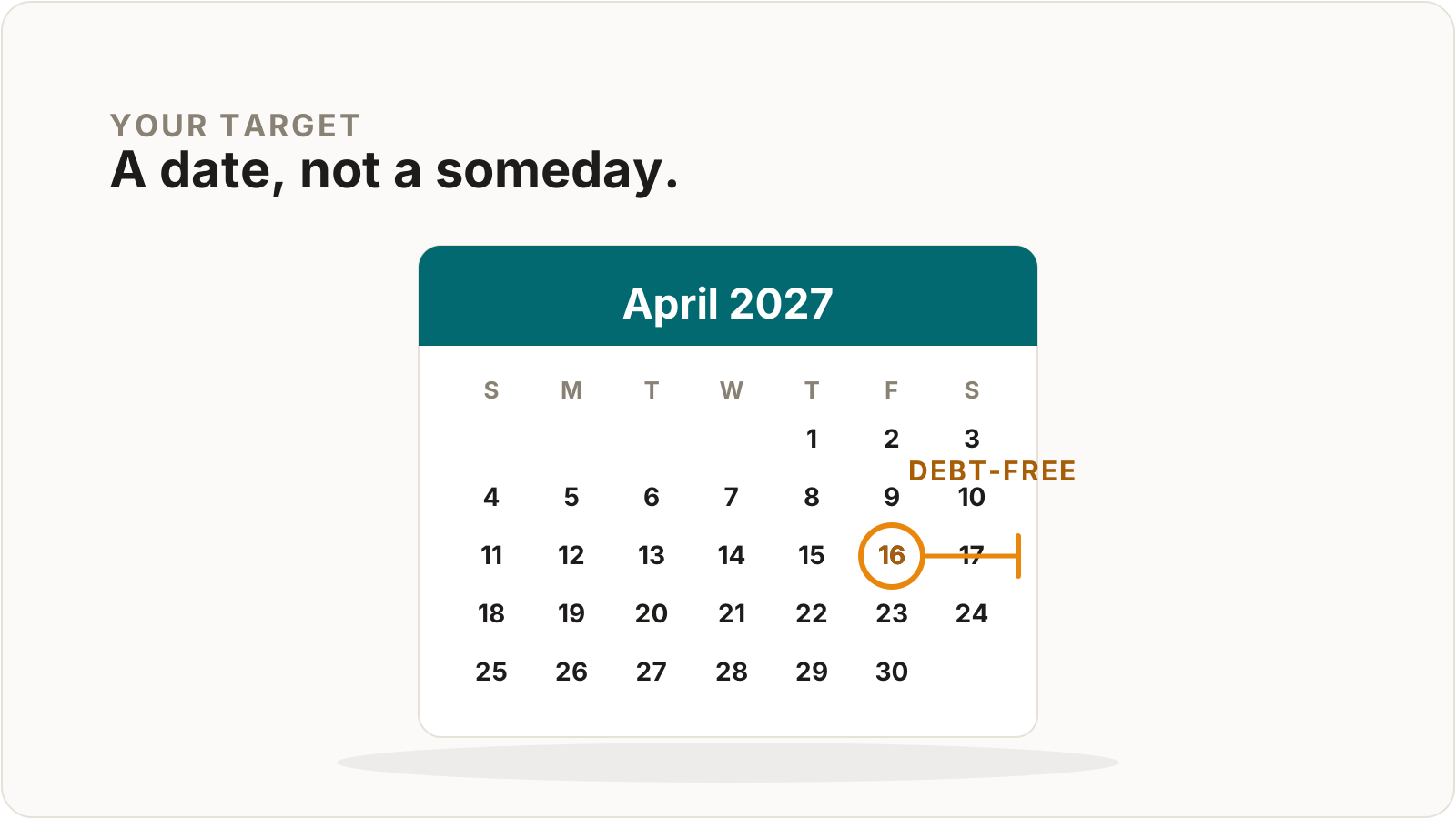
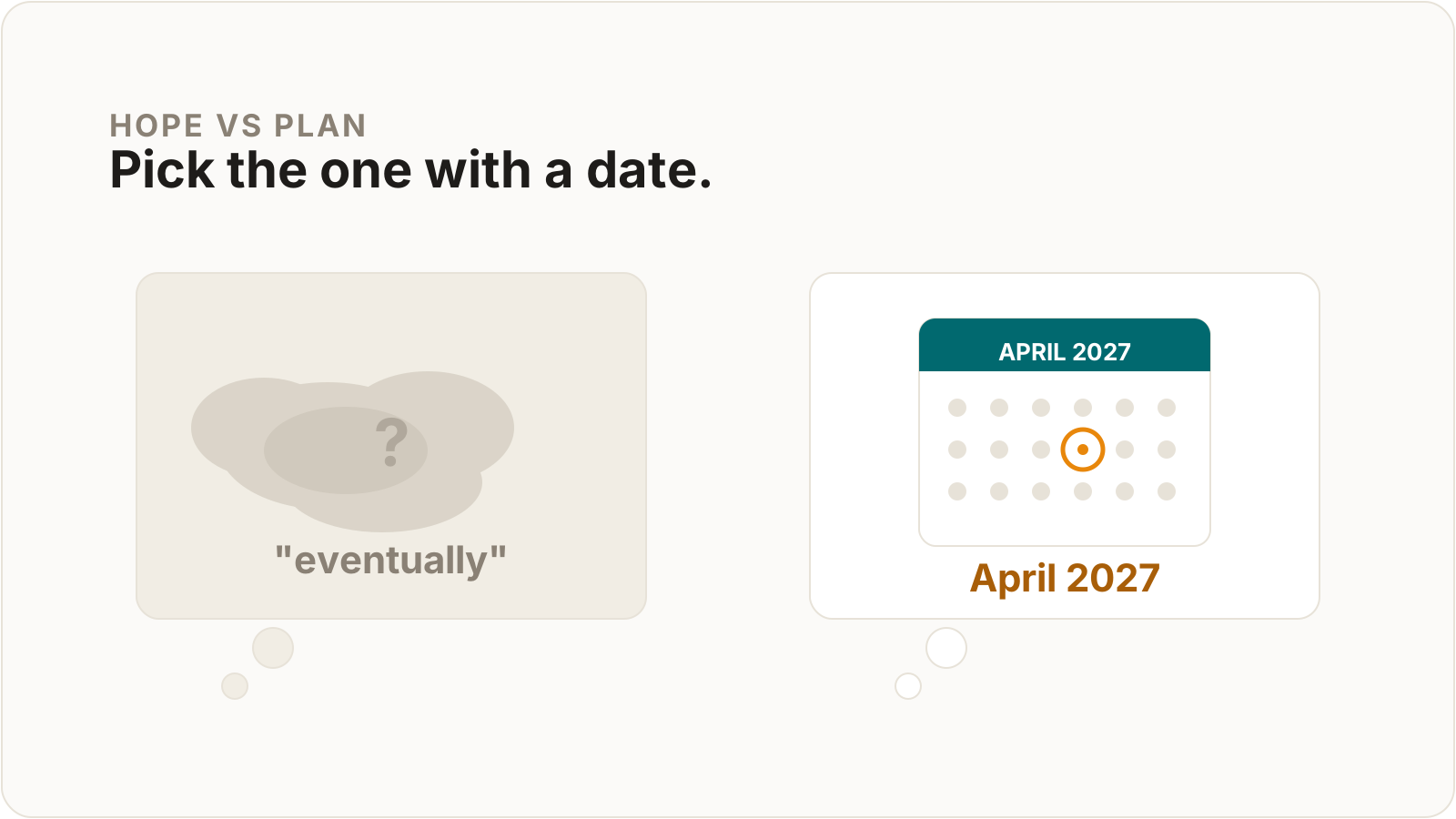
Most people with debt have a vague hope. "Someday I'll have this paid off." "Eventually, when things settle down."
Someday is not a plan. A date is different in ways that go deeper than semantics. You know motivation matters. This is about what specifically changes the moment you have a date — the decisions you make differently, the trade-offs that suddenly become calculable, the shift from wishful to concrete.
The Difference Between a Hope and a Date
Abstract goals feel unsolvable because they have no edge. There's no point at which you can say "done." The endpoint shifts, fades, or disappears entirely when motivation dips.
Specific endpoints work differently. When you know exactly when something ends, your relationship to the work changes. The effort feels bounded. The sacrifice makes sense. Each payment connects to a finish line you can see.
This isn't a motivational metaphor. It's a documented phenomenon in behavioral science: when people have specific timelines, they plan better, maintain commitment longer, and are more likely to complete what they started.
A debt-free date moves your goal from "things I want" to "things I'm doing."
The Decisions That Change the Moment You Have One
Here's what the difference looks like in practice — not in theory, but in the actual moments where money decisions get made.
At the checkout
You're in a checkout line. There's an item you don't need but want. With a vague "someday" goal, the calculation is abstract. Maybe you buy it, maybe you don't.
With "April 2027" in your head, the calculation is concrete. Does this purchase push that date back? By how much? Is it worth three days on my payoff timeline?
That's a different decision-making process entirely. The same logic extends to vacations you're considering, a car upgrade that seems reasonable, a home improvement project that isn't urgent. Every discretionary decision stops being a standalone question and starts being a trade-off against a real date.
With your savings rate
One of the hardest questions in personal finance: when do you start building savings instead of throwing everything at debt? With a vague goal, this tension never resolves. You either delay savings indefinitely or feel guilty about every dollar that doesn't go toward debt.
A date makes the timeline explicit. If you're debt-free in April 2027, you know when the full savings runway opens up. You can plan around that — not guess around it.
With your career choices
Should you take the higher-paying job that comes with more risk? Should you negotiate harder, take on a side project, pick up freelance work? These decisions feel disconnected from your debt until you have a date.
With April 2027 as your reference, the calculus changes. Every decision that accelerates income has a measurable impact: not just more money in the abstract, but weeks or months off a specific timeline. And every decision that adds financial instability has a cost that's just as concrete.
The date is what makes debt payoff a framework for decisions, not just a line item in your budget.
Build your free debt payoff plan — find your date in 5 minutes →
Why Specificity Is the Variable That Matters
Research on goal commitment consistently shows that specificity is the variable that matters most.
"Lose weight" produces less sustained behavior change than "lose 15 pounds by October 1st." "Save money" produces less than "save $8,000 by December." "Pay off debt" produces less than "be debt-free by April 2027."
The mechanism is straightforward: when your brain can model the end state, it can work backward from it. Abstract goals don't give the brain a model to work from. They stay in the category of "things I want" rather than "things I'm doing."
This is why the debt-free date is the most important output of a payoff plan. Not the total interest savings. Not the monthly payment breakdown. The date. Because the date is what shows up in your head at the checkout line, at the salary negotiation, at the moment you decide whether to make an extra payment this month or not.
How PayoffPal Works Out Your Date
You enter each debt — balance, minimum payment, interest rate — along with your extra monthly payment amount and your chosen strategy (snowball or avalanche). No credit check. No bank connection. PayoffPal runs the numbers and returns the specific month and year your last balance hits zero, usually in under five minutes.
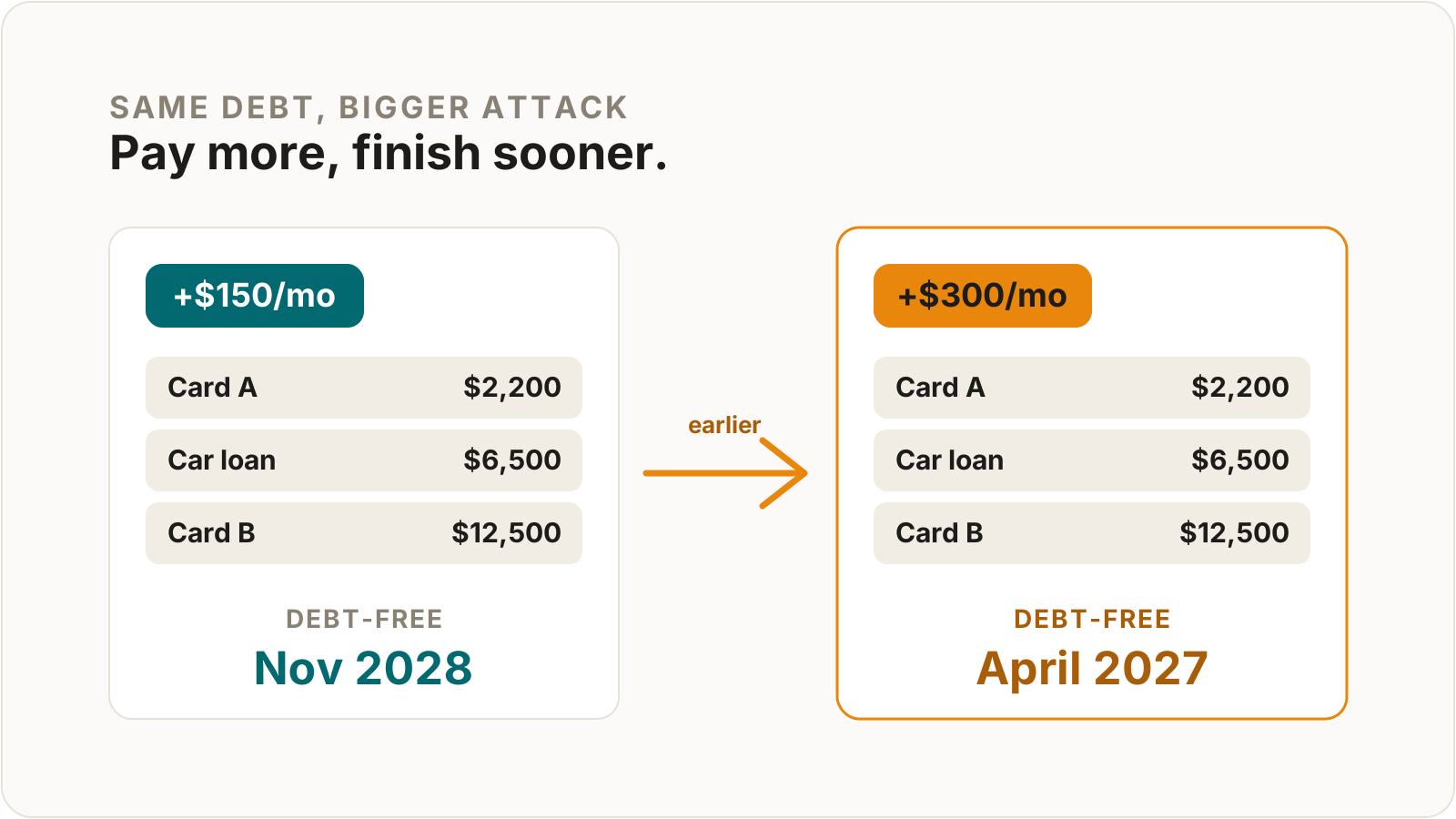
Change the attack amount and the date updates. Run scenarios, see exactly what each decision is worth in time.
What to Do With the Date Once You Have It
The vague dread of debt gets replaced by something more useful: a timeline. The problem stops feeling infinite and starts feeling like a project with a deadline.
People set calendar reminders for their debt-free month. Some count down to it. Others share it with a partner or a friend. Accountability becomes possible because there's a specific thing to be accountable to.
Users on PayoffPal are on track for an average debt-free date of April 2027. Not "sometime in a few years." April 2027. That specificity matters. It's the difference between a wish and a plan.
The block tower is finite. Every payment removes material from it. The tower that looked impossibly tall in month one looks different in month twelve. From the right vantage point, you can see the top from the bottom.
The debt-free date is that vantage point.
How to stay motivated through the full payoff journey is where the behavioral side lives — how you keep going once you have the date. And the step-by-step plan that generates your date is where it all starts.
Find out your debt-free date. It takes 5 minutes.
Build your free debt payoff plan →
Frequently Asked Questions
How do I calculate my debt-free date?
Enter each debt (balance, minimum payment, interest rate), your extra monthly payment, and your chosen strategy (snowball or avalanche). A debt payoff calculator runs the amortization sequence and returns the month and year your last debt hits zero. PayoffPal does this free in under 5 minutes.
What is a debt-free date?
The specific month and year you will make your final debt payment, based on your current balances, interest rates, and payment plan. It's the output of a structured debt payoff plan — not a guess or a rough estimate.
Why is knowing my debt-free date important?
A specific date changes how you make decisions. Abstract goals produce vague behavior. A concrete date makes trade-offs calculable and keeps motivation grounded in a real endpoint rather than a vague hope.
Can my debt-free date change?
Yes — in both directions. Extra payments, clearing a debt early, or adding new debt all move the date. A good debt payoff planner recalculates automatically so you can see the impact of each decision in real time.