Why Debt Motivation Collapses After Week 2 (And How to Fix It)
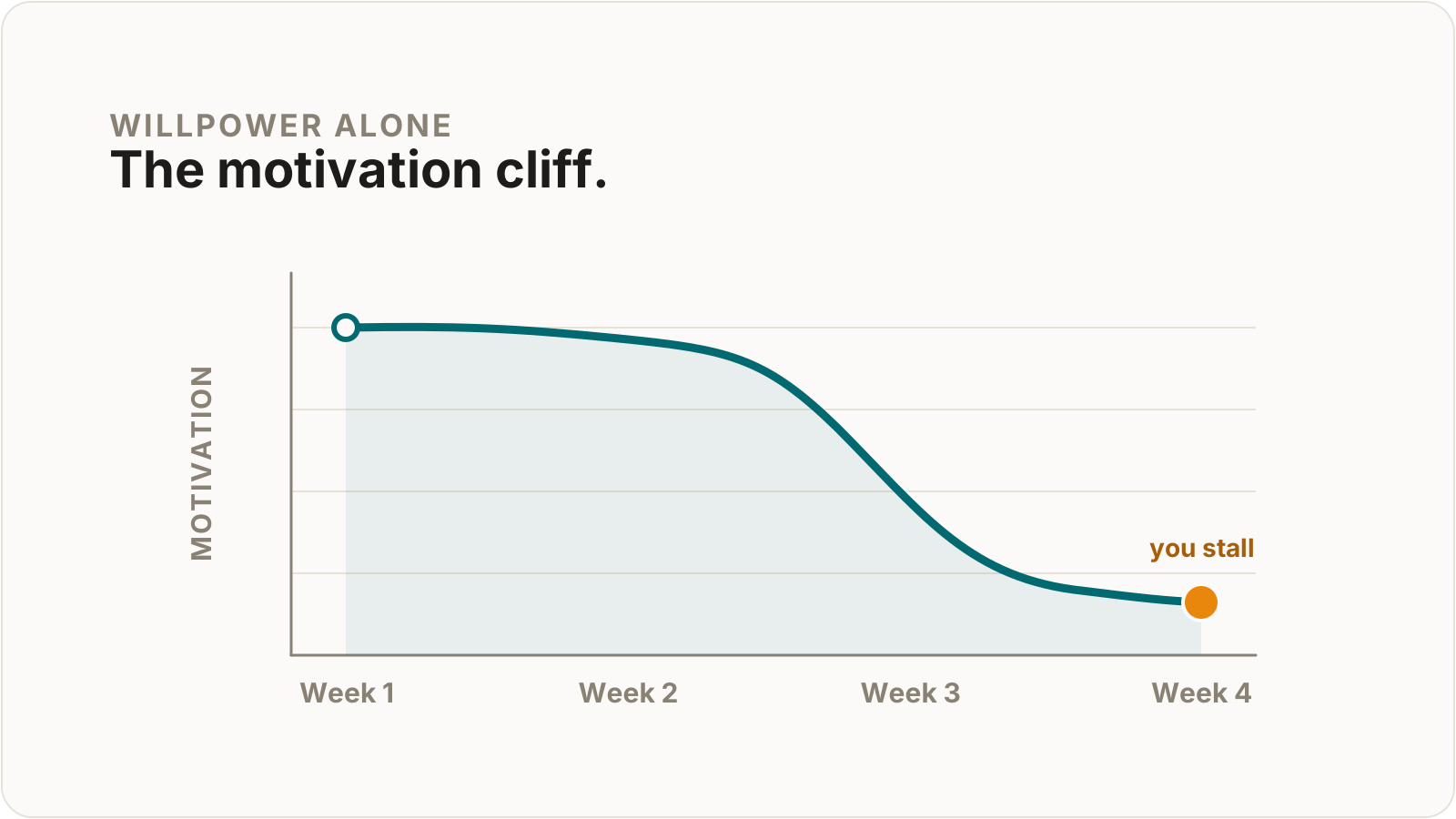
Week 1 of a debt payoff plan: you're fired up. You've done the math. You've set up autopay. You're ready.
Week 3: the balance barely moved. The date still feels impossibly far away. The motivation you had is nowhere. This happens to almost everyone.
It's not weakness. It's biology meeting a system that wasn't designed to sustain you.
The Motivation Cliff: What Actually Happens
High initial energy is normal for any new behavior. Something clicks, you take action, you feel good. But that initial energy is essentially borrowed from the future. It doesn't refill automatically.
For debt payoff specifically, the gap between action and visible reward is enormous. You make a payment. The balance drops a little. Nothing changes in your daily life. Nothing celebrates you. The debt-free date moves by a few weeks. It still says something like "March 2028."
Without a feedback loop, the brain's reward system has nothing to work with. There's no signal that what you're doing is working. So it stops prioritizing the behavior.
What "Debt Fatigue" Is (And Isn't)
"Debt fatigue" is the term personal finance communities use for this: the psychological exhaustion that sets in when you're deep in a payoff journey and the end feels unreachable.
It's distinct from financial stress. You can have debt fatigue even when things are technically going well. The plan is working. The numbers are moving in the right direction. But the emotional experience is flat, or worse, demoralizing.
Debt fatigue is why people abandon payoff plans that would have worked. Not because the math was wrong. Because the experience of executing the plan over months and years wasn't sustainable.

Why the Standard Advice Doesn't Help
The usual prescription — "remember your why," "track your net worth," "reward yourself with a treat" — addresses motivation as a willpower problem. It isn't.
Willpower is a resource that depletes. Any system that depends on you summoning it repeatedly, for months or years, will eventually fail. The fix isn't more discipline. It's a better-designed experience.
The goal is to make the right behavior feel rewarding enough that motivation isn't the bottleneck. That's a design problem, not a character problem.
What Games Got Right About Long-Term Goals
Video games solved a version of this problem decades ago.
A game where you spend 40 hours grinding toward a single reward would feel pointless. So games built progress systems: experience bars, level-ups, unlocks, achievements, leaderboards, streaks. Every session gives you something. You finish a session slightly further along than when you started, and the game makes sure you know it.
None of this changes the underlying goal. You still need to complete the game. But the micro-rewards keep you engaged through the long middle sections.
That's the insight applied to debt payoff. The goal doesn't change. But the experience of working toward it can be redesigned to give your brain the feedback it needs to stay engaged.
What Gamification Actually Means for Debt Payoff
This isn't about stickers or cartoon characters. Gamification in a serious financial context means rebuilding the feedback loop that standard debt tracking strips out.
Visible Progress
Not a number that slowly decreases. A tower that visibly shrinks. A completed block that's gone from the stack. The difference between cognitive and visceral: a number decreasing is information; a block disappearing is an event.
Milestone Moments
The moment a debt hits zero should feel like something. Not just a number disappearing, but a block knocked off the tower — a concrete, visible shift in your situation. Each cleared debt is its own finish line, not just a waypoint in an undifferentiated slog.
A Clear Horizon
Knowing when the whole thing ends. Not "someday." A specific date. Something you can point to on a calendar.
Staying motivated is the process. What changes the moment you have a specific date is a different, more powerful shift — one that rewires how you make small daily decisions. Once you have a date, every on-plan payment becomes a move toward a known finish line, not a contribution to an open-ended unknown.
Build your free debt payoff plan →
The Block Tower
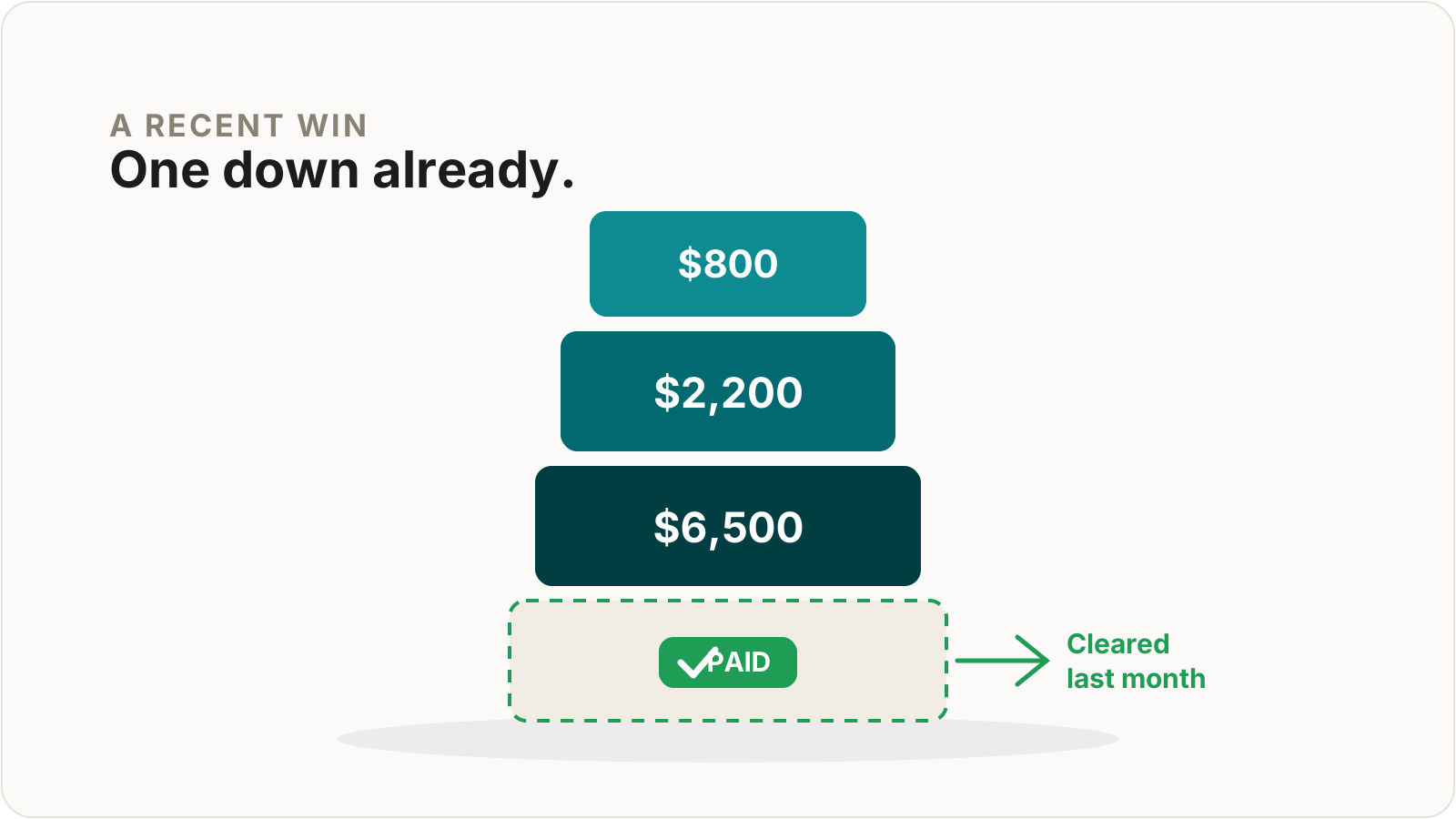
PayoffPal visualizes your debts as a tower of blocks. Each debt is a block. When you pay it off, it's gone from the tower. The pile shrinks.
This sounds simple. That's the point.
The visual does something a spreadsheet can't: it makes the abstract concrete. You see the tower getting shorter. You can see where the end is from where you are now.
Users who have knocked down blocks report that the first one is the hardest and the most motivating. The second is faster. By the third, the system is working the way it's supposed to.
This is why budgeting apps don't pay off debt: they have no motivation layer. They show you what happened. They don't celebrate what you did or show you how close you are.
About 2,847 blocks have been knocked down on PayoffPal. That's 2,847 moments where someone's tower got shorter and the plan kept working.
One Thing to Do This Week
If you're reading this because the motivation has already started to slip, there's one move worth making today: get a specific debt-free date in front of you.
Not a rough estimate. Not "a few years." A month and a year, calculated from your actual balances, interest rates, and payment amounts.
Once you have it, write it somewhere you'll see it. That date is now your target. Every payment moves it closer. The abstract grind becomes a countdown.
If you don't have a payoff plan that generates that date automatically, this walkthrough covers how to build one from scratch — including how to sequence your debts for the fastest possible payoff.
That's it. One number. One date. The rest of the system builds from there.
Get your debt-free date on PayoffPal →
Frequently Asked Questions
Why do I lose motivation to pay off debt?
Because debt payoff takes months or years, early progress is invisible, and there's no built-in reward system. This is "debt fatigue" — a documented pattern, not a personal failing. The fix is making progress visible and creating intermediate milestones.
How do I stay motivated to pay off debt long-term?
Make your debt-free date concrete and keep it visible. Track progress visually rather than numerically. Celebrate clearing each individual debt, not just the overall total. Automate payments so motivation doesn't have to drive every decision.
What is debt fatigue?
The psychological exhaustion that sets in after months of making payments with no visible end in sight. Distinct from financial stress — you can have debt fatigue even when your plan is working. It's the most common reason viable debt payoff plans get abandoned.
Does gamification help with debt payoff?
Yes, when applied meaningfully. Visual progress trackers, milestone celebrations, and a concrete debt-free date replicate the feedback loops that make habits stick. PayoffPal's block tower model turns each cleared debt into a visible event rather than a silent number change.