Why a Budgeting App Won't Pay Off Your Debt (And What Will)
If You Have Debt and a Budgeting App, Read This First
You set up YNAB — or Copilot, or Monarch Money. You linked your accounts, assigned your dollars to categories, and felt genuinely in control for the first time in months.
Three months later, your debt balance is roughly where it started.
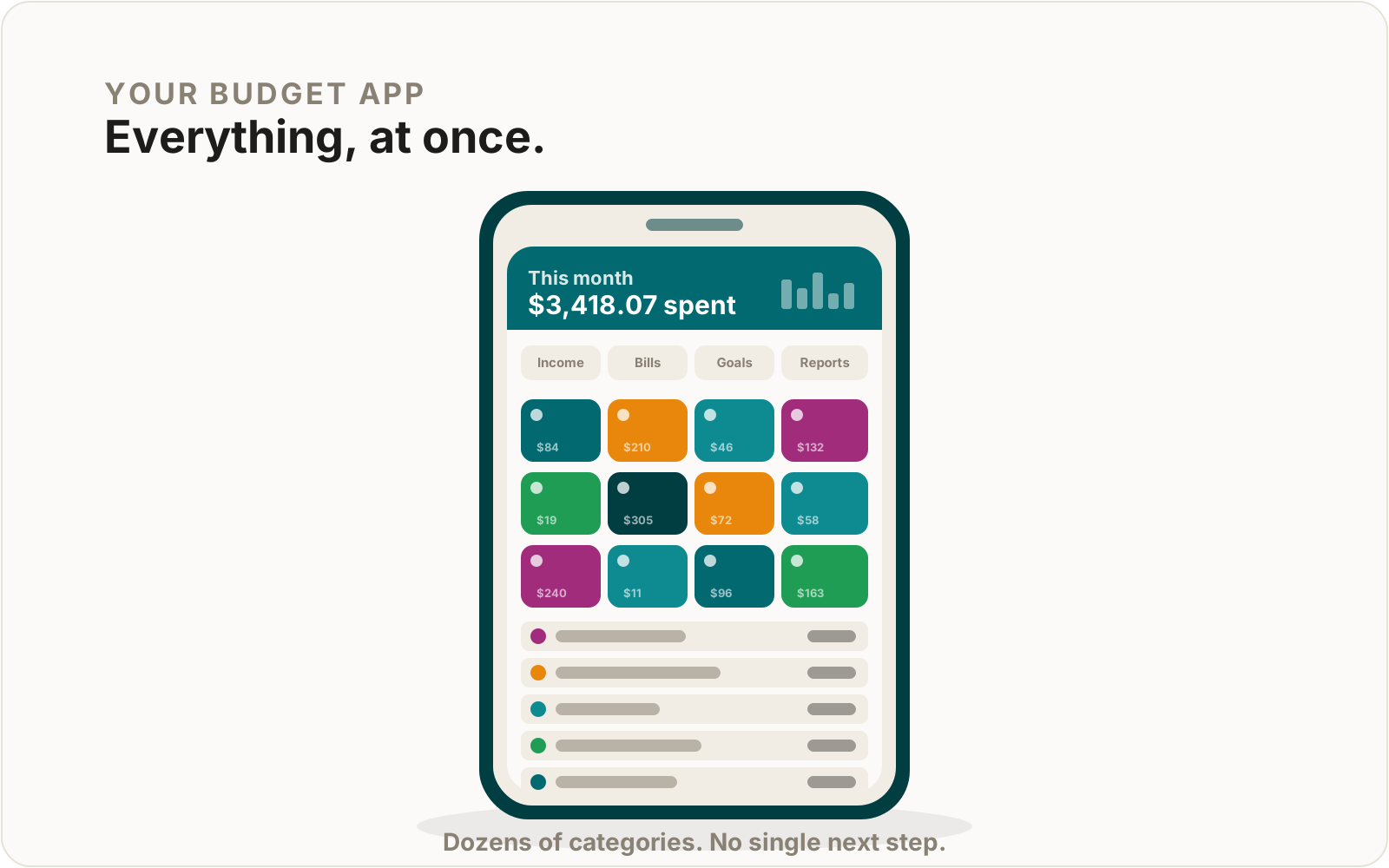
Not because you didn't try. You did try. But you've been using the right tool for the wrong job. Budgeting apps are not debt payoff apps. They are spending trackers. And when you have $15,000 or $30,000 in credit card debt, tracking your spending is not the thing standing between you and freedom from that debt.
This is the structural problem no one tells you about when they recommend YNAB.
What Budgeting Apps Are Actually For
Budgeting apps are built around a single core question: where did your money go?
That question is genuinely useful. If your problem is that you don't know why your account is always low at the end of the month, a budgeting app can surface patterns you didn't see. If you're building habits around discretionary spending, the category view is real feedback.
Budgeting apps are optimized for financial awareness — for people who have money to allocate and want more visibility into how it moves.
That is a real use case. It is just not your use case if you are trying to pay off debt.
Why They Don't Work When You're in Debt
The Maintenance Problem
Budgeting apps require ongoing attention every week, indefinitely, to function. Transactions miscategorize. A subscription charges from an unexpected account. A large purchase throws off the month. You spend 20 minutes untangling it, then do it again next month, then start doing it less, then stop.
The apps that gained the most traction — YNAB, Copilot, Monarch Money — are sophisticated and well-designed. They also require a recurring time investment that most people cannot sustain. That's not a discipline problem. It's a contract that is simply hard to keep when the reward is a slightly more organized view of the past.
The Rearview Mirror Problem
Knowing you spent $400 on dining in March is real data. But if your problem is $18,000 in credit card debt, "where did my money go" is not the question that needs answering. "How do I get out of this" is.
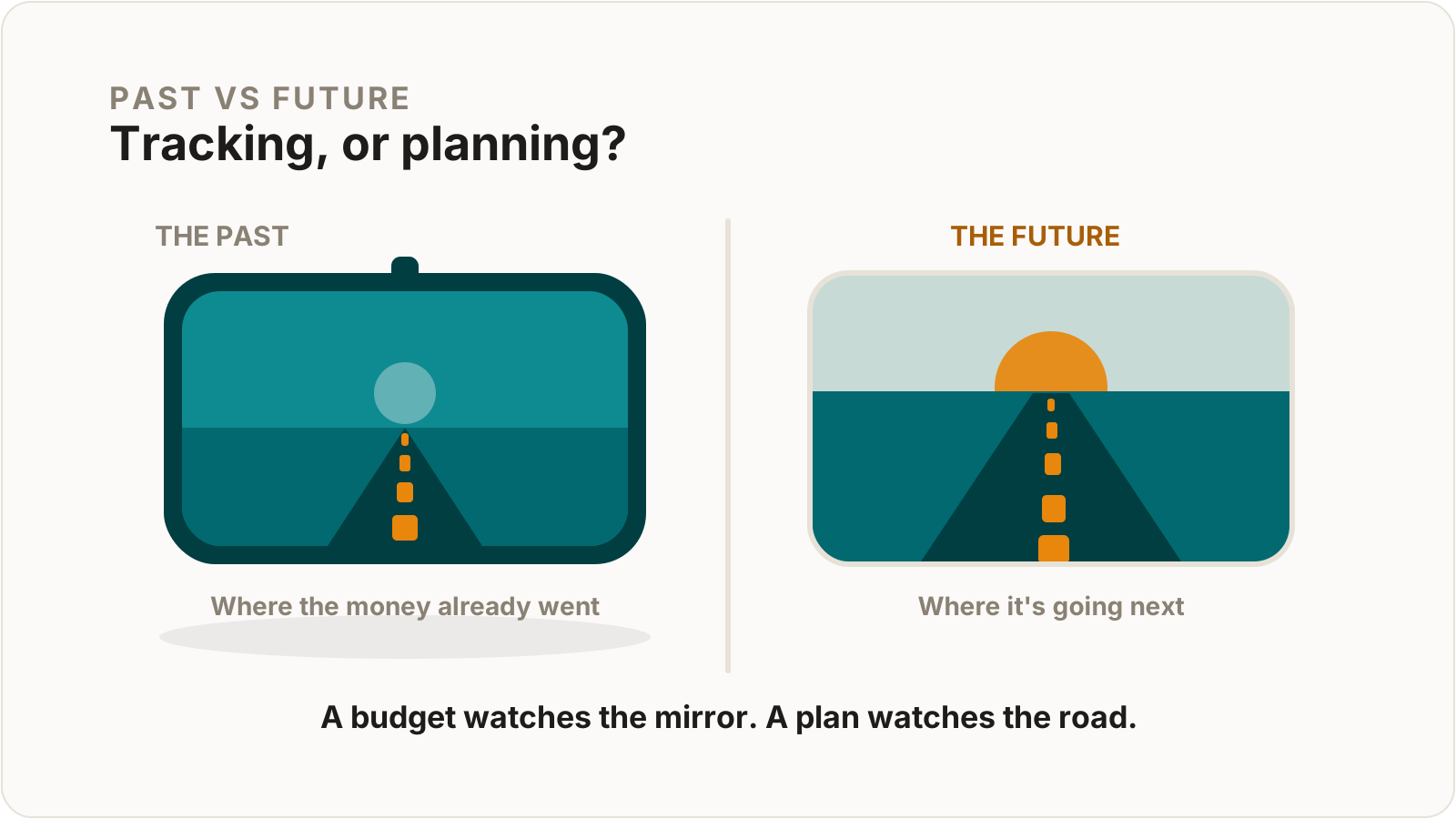
Budgeting apps are rearview mirrors. They tell you what happened. They do not rank your debts, pick a payoff strategy, or calculate a date when you'll be free. They don't tell you what to do next month — only what happened last month.
The Motivation Problem
There's a deeper issue. When you're trying to pay off debt, the cognitive load of maintaining a budgeting app works against your momentum.
Every week you're categorizing, reconciling, reviewing, adjusting. That's mental energy spent reconstructing the past. The debt doesn't need a post-mortem. It needs a sequence of actions with a visible finish line.
As we covered in our piece on why debt motivation collapses in the early weeks, progress invisibility is one of the primary reasons people abandon their payoff efforts. Budgeting apps make this worse: they show you where you spent money, not how close you are to being done. When progress is invisible, motivation dies.
What Paying Off Debt Actually Requires
One number.
Not 47 spending categories. Not a net worth dashboard. Not a subscription reconciliation.
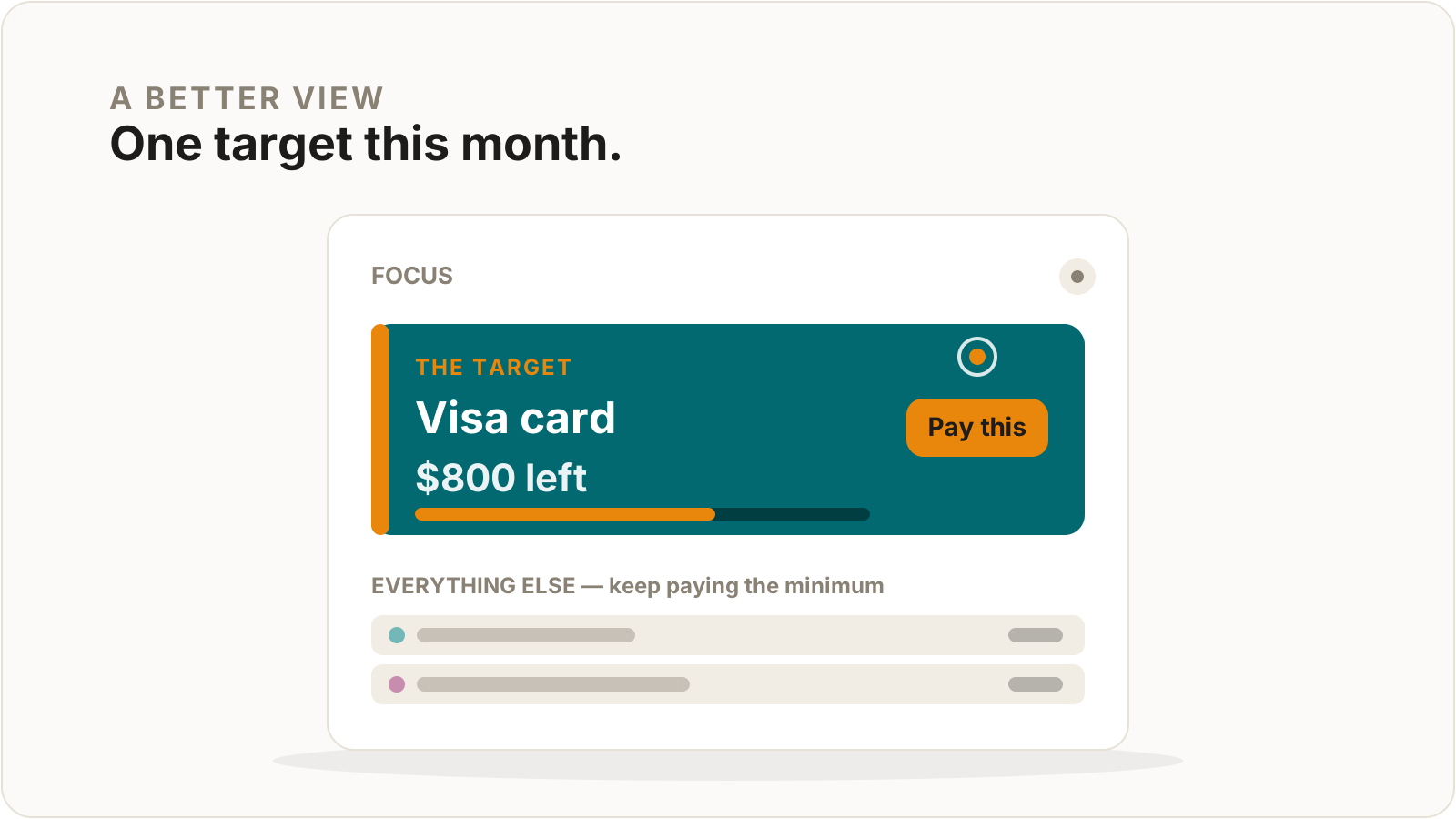
The one number is: what do you pay this month, and to which account?
That's the whole job. Everything else is noise until the debt is gone.
A debt payoff plan is structured differently than a budget. You set it up once. You enter your debts, your minimums, your extra payment amount. The plan tells you what order to attack them in — using either the snowball or avalanche strategy — and shows you exactly when the last debt falls. Then you follow it.
No ongoing input. No categorization. No reconciliation. Just the plan and the payment.
If you're wondering what that actually looks like in practice, see how to pay off debt fast.
Ready to stop tracking and start eliminating? Enter your debts once. Get a ranked payoff plan and a debt-free date.
The "Set It and Follow It" Model
PayoffPal is built on the opposite model from a budgeting app. You enter your information once. The plan is generated. You follow the plan.
Each month you have one job: pay your minimums automatically and throw your attack amount at your target debt. That's the entire interaction with the system.
This works for the same reason any clear system works: when the cognitive load is low and the required action is specific, you do it. When the cognitive load is high and the action is ambiguous, you stop. Budgeting apps ask you to maintain a complex model of your finances indefinitely. A debt payoff plan asks you to do one thing each month.
If you have debt and you've burned out on budgeting apps, you weren't failing at discipline. You were using the wrong tool.
Budgeting apps optimize for awareness. PayoffPal optimizes for getting out of debt. Those are different products for different jobs.
Frequently Asked Questions
What is the best app for paying off debt?
A dedicated debt payoff planner — not a budgeting app. Budgeting apps track spending but don't rank your debts, pick a strategy, or calculate a debt-free date. PayoffPal is built specifically for debt payoff: enter your debts once, get a ranked plan and a projected payoff date.
Why do budgeting apps not work for paying off debt?
They track where money went — they don't direct money toward debt clearance. Paying off debt requires a ranked plan with a specific target and a sequence of payments, not spending categories and monthly reconciliation. The tools serve different purposes.
Should I use YNAB or a debt payoff app?
If your primary goal is eliminating debt, a debt payoff app is the better tool. YNAB is powerful for overall budget management but requires ongoing time investment and doesn't calculate a debt-free date or rank debts by strategy. Once you're debt-free, YNAB becomes a much more useful tool.
Can I use both a budgeting app and PayoffPal?
Yes. Some people track spending in Monarch Money or Copilot while using PayoffPal for the debt plan. The two tools serve genuinely different purposes. If you're overwhelmed, start with just the debt plan — you can always add spending tracking later.
Tell us what you owe. We tell you exactly what to pay first.